

Kingdom Report
www.kingdomvision.co.za
Week of 3 October 2026
Part 3 : Daniel's Persian Administration - A Template for the Coming Healing of the Nations
Daniel appointed Prime Minister of Persia by Darius laid the foundation of a great, stable and prosperous empire for God's people to rebuild a lost dream and prosper and spread the teachings of God's law. A template for the Kingdom of God to rebuild a collapsing world order.
My Application Template for this Lesson Series: 1) In 586 BC Babylon destroyed Jerusalem and the Temple - the Jews were in captivity to Babylon, scattered over the world, disheartened that the great prophecies of their destiny gone, broken and ufulfilled>
Application: The whole Greater Israel end times narrative is failing and about to be taken off the prophetic map in the midst of a Middle East war disaster. The effect on the prophetic and evangelical community will be devastating.
2) Babylon is Falling: God's people around the world are caught in various forms of economcic and political servitude to world Babylon system.
3) Cyrus and a new world order is coming: Out of the collapse of the Babylon empire God freed His people to return to Jerusalem, their inheritance and rebuild the Temple. But now in greater safety and prosperity and world influence in the Persian empire administered by Daniel
Application: After the coming great awakening out of end time theology delusion the Kingdom of God will experience a rapid international expansion as God's people rebuild a new world order using the great tools of modern king Cyrus's to create a world wide platform for stability and prosperity as Daniel and Cyrus and Darius provided the returning Jews out of Babylon.
4) After Persia the Greeks took over and provided the world with a universal language of Greek from which the Hebrew scriptures could be translated into the Greek Septuagint for all the world to study.
Application: English is today's universal language and the internet is spreading the Scriptures in all languages for free in hundreds of languages.
5) After Greece came the Roman Empire and extended to peace and prosperity of the Persian empire to many more lands into the north, the south east and west.
Application: Scripture says "In the fullness of time God sent his son into the world" (Gal. 4:4-5)
The Roman Empire built on succeeding world empires became the perfect platform for the disciples to spread the Church and the Gospel into all the world. And so also in our day and age, God is bringing down all impediments to His spreading Kingdom and giving us the tools to rebuild a new world order.
The template has already been given us for a roadmap in scripture and history.
That is why it is important to understand what Cyrus, Darius and Daniel did in their time and apply that lesson for today....
When Cyrus II (Cyrus the Great) conquered Babylon in 539 BCE, he did not merely take over an existing kingdom; he dismantled the extractive, terror-based imperial model practiced by the Neo-Assyrians and Neo-Babylonians. In its place, he and king Darius instituted the Achaemenid Empire—history’s first true global superpower, spanning three continents from the Indus River to Egypt and Thrace.
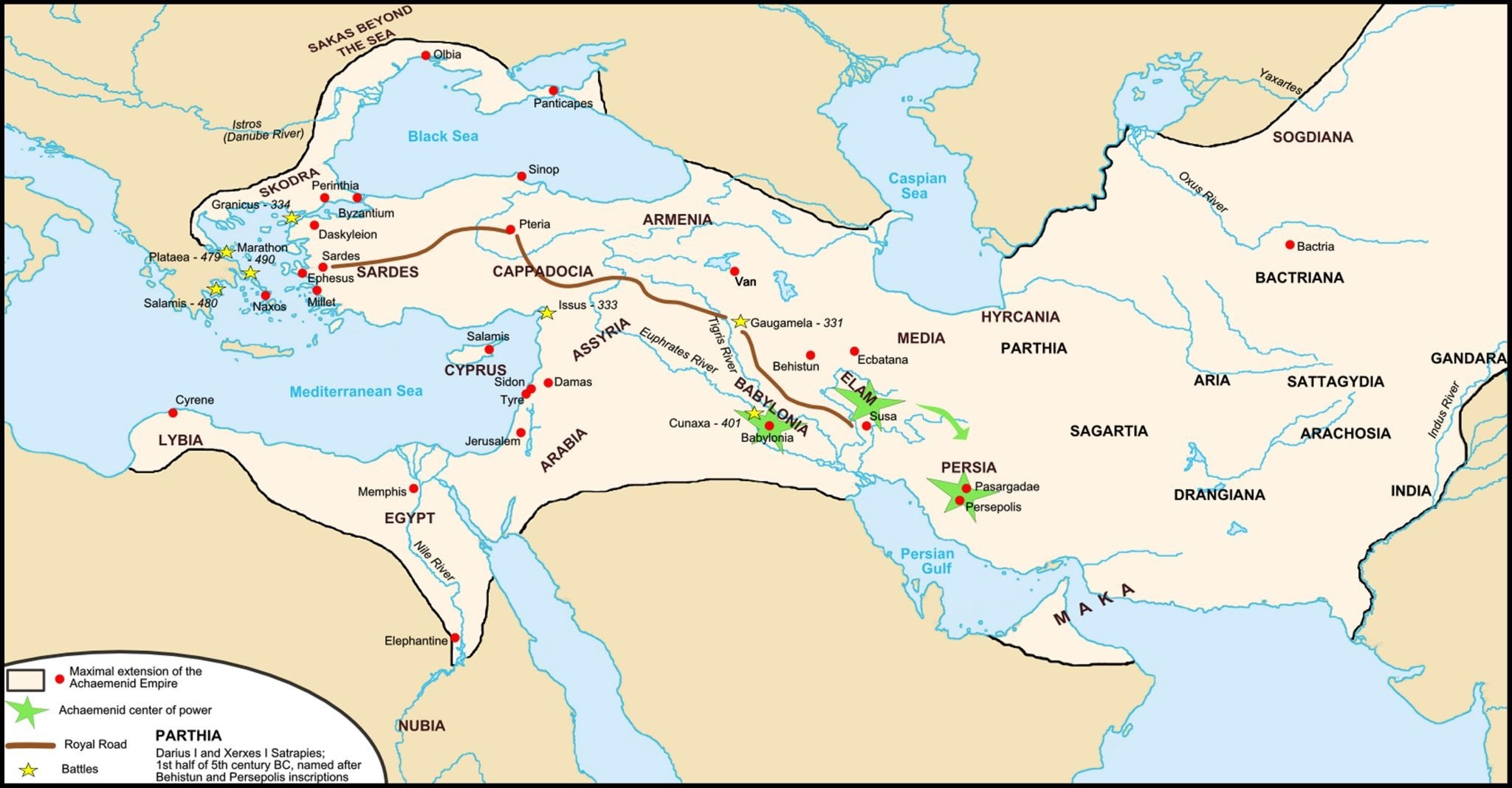
Daniel as Chief Administrator ("Prime Minister")
Biblical records indicate that under Darius the Mede (operating in Babylon under Cyrus's imperial authority), the crown appointed 120 satraps overseen by three high commissioners—among whom Daniel was foremost
(Daniel 6:1–3)
Central to this administrative revolution was the elevation of trusted statesmen—most notably the prophet Daniel, who was appointed as one of the chief administrators ("prime ministers") overseeing imperial governance
(Daniel 6:1–3).
Dan 6:1 It pleased Darius to set over the kingdom an hundred and twenty princes, which should be over the whole kingdom;
Dan 6:2 And over these three presidents; of whom Daniel was first: that the princes might give accounts unto them, and the king should have no damage.
Dan 6:3 Then this Daniel was preferred above the presidents and princes, because an excellent spirit was in him; and the king thought to set him over the whole realm.
Daniel’s placement at the apex of imperial administration provided ethical leadership, prevented embezzlement (Daniel 6:4), and secured institutional protection for displaced ethnic minorities, directly influencing Cyrus’s landmark policy of repatriation.
1. Administrative Structure: The 127 Provinces and the Rule of Law
The Persian governing model balanced vast administrative reach with localized autonomy, moving away from mass deportations toward legal continuity:
The Satrapy System (i.e for Decentralized Power)
The empire was partitioned into major satrapies and further subdivided into administrative provinces—reaching 127 provinces from India (Hodu) to Nubia/Cush (Esther 1:1).
- Division of Powers: In each satrapy, power was divided between three independent officials who answered directly to the Crown: the civil governor (Satrap), the chief military commander, and the royal treasurer.
- The "King's Eyes and Ears": Independent royal inspectors moved through provinces unannounced to conduct audits, verify tax collections, and prevent provincial governors from abusing local populations.
The Inviolable "Law of the Medes and Persians" (i.e. The Rule of Law)
Unlike Babylonian monarchs who ruled by personal whim, Persian kings bound themselves to a codified legal structure (Daniel 6:8, 12, 15). Once an imperial decree was ratified and sealed, it could not be repealed arbitrarily. The Cyrus Cylinder corroborates this shift: Cyrus declared religious toleration, returned seized sacred objects, ordered the repair of local sanctuaries, and allowed displaced peoples to return to their ancestral lands.
2. Imperial Infrastructure: Highways, Postal Relays, and Monetary Stability
The Babylonians operated largely as a centralized, predatory state that emptied conquered lands to enrich Babylon itself. Cyrus reversed this dynamic by creating connective economic infrastructure designed to integrate diverse cultures and economies:
- The Royal Road and Highway Network: Cyrus pioneered—and subsequent rulers like Darius I expanded—an arterial road network linking major imperial capitals (Susa, Persepolis, Ecbatana, Babylon, and Sardis). The primary trunk line, the Persian Royal Road, stretched over 1,600 miles (2,700 km).
- The Postal Relay System (Chapar Khaneh): Stationed at intervals of approximately one day’s ride along these highways were fresh horses and royal couriers (angarium). As Herodotus famously noted, neither snow, rain, heat, nor darkness prevented these couriers from completing their stages with unprecedented speed. Imperial edicts, troop movements, and trade manifests traveled across thousands of miles in days rather than months.
- Trade Integration & Monetary Reform: Under Persian hegemony, weights and measures were standardized across the empire. The introduction of high-purity, standardized imperial currency—gold Darics and silver Sigloi—provided price stability and liquidity across regional borders. Merchants, craftspeople, and caravans could trade securely without suffering extortion from predatory warlords or erratic local exchange rates.
3. Strategic and Economic Advantages for the New Jerusalem
For the returning Jewish exiles led by Zerubbabel, Jeshua, Ezra, and later Nehemiah, being integrated into this Pax Persica offered essential protections and resources:
| Aspect |
Babylonian Era (Pre-539 BCE) |
Persian Imperial Era (Post-539 BCE) |
Impact on Judah (Yehud Medinata) |
|---|---|---|---|
Imperial Policy |
Mass exile; deliberate desolation of conquered cities. |
Repatriation; state-sanctioned reconstruction. |
Cyrus issued an imperial decree permitting the return to Zion (Ezra 1:1–4). |
Temple Funding |
Temple sacked; sacred vessels stored as war trophies. |
Royal treasury subsidized construction; vessels restored. |
5,400 gold and silver vessels returned; timber sourced from Lebanon by royal warrant (Ezra 1:7–11; 6:4). |
Legal Protection |
Zero legal recourse against regional oppressors. |
Enforceable imperial decrees backed by royal force. |
When local adversaries (Sanballat, Tobiah) tried to halt the work, imperial archives confirmed Cyrus’s original decree (Ezra 5–6). |
Security & Governance |
Open to nomadic raids; lawless periphery. |
Garrison escorts and royal appointments (e.g., Nehemiah as cupbearer and governor). |
Nehemiah arrived with letters of safe passage and authority to rebuild Jerusalem’s walls (Nehemiah 2:7–9). |
4. Jerusalem at the Crossroads: Theological and Geopolitical Destiny
From a biblical perspective, the rise of the Persian Empire and the return of Judah were not historical accidents, but the fulfillment of divine providence (Isaiah 44:28; 45:1–4; Jeremiah 29:10).
Geopolitical Crossroads of Three Continents
The Levant forms a terrestrial land bridge linking Asia, Africa (Egypt), and Europe via the Mediterranean:
- Two of antiquity's critical thoroughfares passed right beside Jerusalem: the Via Maris (Way of the Sea) along the Mediterranean coast and the King’s Highway through the Transjordan plateau.
- By re-establishing Jerusalem as a functioning administrative and religious sanctuary along this commercial funnel, the Persian Crown created an allied, stable buffer province on the border of Egypt, while providing Israel with a global transit corridor.
Projecting the Law of Moses (Torah) to the Nations
Ezekiel 5:5 states: "This is Jerusalem; I have set her in the center of the nations, with lands all around her." Under Persian rule, this geographic centrality transformed into an engine for projecting biblical monotheism:
- Official Endorsement of the Torah: Artaxerxes I granted Ezra the scribe imperial authority to appoint magistrates and teach the Law of God across the entire satrapy of Beyond the River (Transeuphrates):
"And you, Ezra, according to the wisdom of your God which is in your hand, appoint magistrates and judges that they may judge all the people who are in the province beyond the River, even all those who know the laws of your God; and you may teach anyone who is ignorant of them." (Ezra 7:25)
- Diaspora Network: Not all Jews returned to Jerusalem; vast communities remained in Susa, Babylon, and Media. Jerusalem functioned as the theological and pilgrimage heart for a connected, empire-wide diaspora.
- Witness to Gentiles: Positioned along imperial trade arteries, foreign traders, royal emissaries, and neighboring ethnic groups (Persians, Phoenicians, Ammonites, Egyptians, and Greeks) regularly interacted with the monotheism, ethical Sabbath laws, and civil statutes of the Mosaic Law, laying the geographical and scriptural groundwork for the spread of biblical teachings across the Mediterranean world.
This is our template for the 21st Century Church to build a new world order.